Best Rate Guaranteed
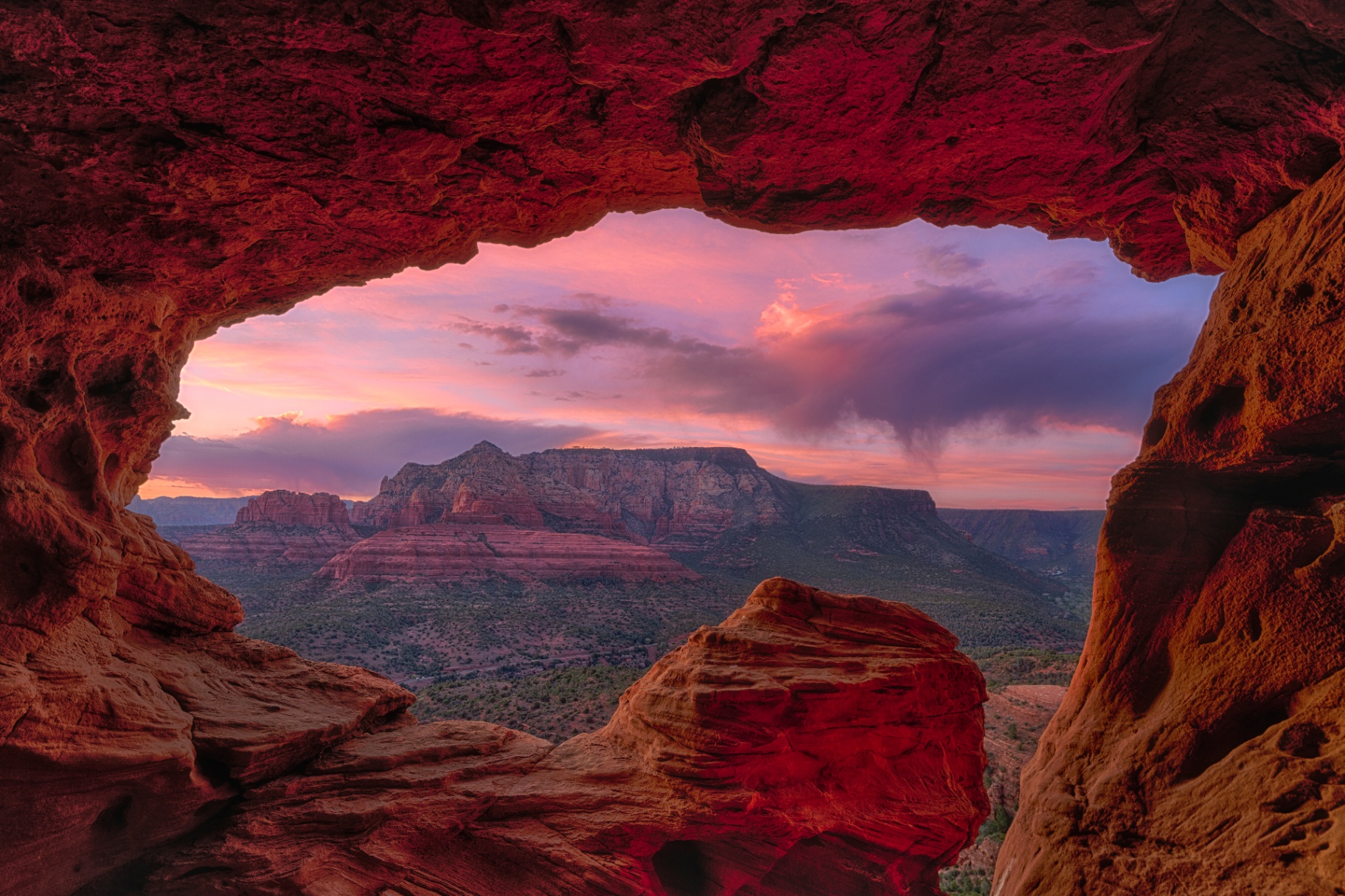
Sunrise over the Airport Mesa vortex and red rocks, Sedona

Trails & Outdoors · 6 min read

The Sedona Vortexes, Explained — Starting With the One at Our Doorstep

What a vortex actually is, the four main sites and the distinct energy each is said to carry, and why the most accessible of them all is a short walk from the lodge.

Sky Ranch Lodge
← All stories

Spend more than a day in Sedona and the question finds you: have you been to a vortex yet? For a town defined by its red rock, Sedona is equally defined by something less visible — a belief, generations deep, that certain places among these formations hum with a particular energy. People travel from all over the world to stand in them, to meditate, to feel whatever there is to feel.

You don't have to arrive a believer to be moved by it. Whether you sense a swirl of energy or simply the awe of standing somewhere genuinely beautiful and still, the vortexes are among the most rewarding places to spend a Sedona morning. And there's a happy accident in where we sit: Sky Ranch Lodge is perched on Airport Mesa — home to one of the four main vortexes, and the easiest of them all to reach. For our guests, a vortex is quite literally a walk before breakfast.

Here's an honest, open-minded guide to what the vortexes are, the four best-known sites and their reputed energies, and how to visit them well.

At a glance

The four main vortexes

VortexEnergySaid to supportGetting there
Airport MesaUpflow · masculine · electricClarity, confidence, perspectiveA short, steep climb on Airport Mesa — a walk from the lodge
Cathedral RockInflow · feminine · magneticEmotional healing, reflection~15–20 min drive; short but strenuous scramble
Bell RockBalanced, with a slight upflow leanFocus, intention, energizing~15 min drive; easy and accessible
Boynton CanyonCombination · balancedWholeness, deep calm~20–25 min drive; easy–moderate to the vortex knoll

The basics

What is a vortex, exactly?

A Sedona vortex is described as a swirling center of the earth's energy — a place where that energy is said to be especially conducive to meditation, healing, reflection and self-discovery. Many visitors report feeling recharged, inspired, calmer, or unusually clear-headed after spending time at one. Some describe a faint tingling in the hands and feet; others simply notice the quiet settling that comes from sitting on warm rock with the valley spread out below.

It's worth being straightforward: this isn't an established scientific phenomenon, and you'll find as many explanations as there are people offering them. The word itself was popularized only around 1979, when the psychic Page Bryant identified four of the most accessible sites and called them "vortexes." A well-known local author, the MIT-trained Pete A. Sanders Jr., has long argued the term is a bit misleading — that these are better understood as exceptional meditative sites, where the beauty, the elevation and the stillness make prayer, reflection and creative thinking come more easily. "Vortex is just the word that stuck," as he puts it.

What's beyond dispute is that this land was held sacred long before any modern movement gave it a name. The red rocks around Sedona — Cathedral Rock and Boynton Canyon especially — have been places of ceremony and significance for the Yavapai and Apache peoples for thousands of years. Whatever you make of the energy, it's worth visiting with that reverence in mind.

The vocabulary

Upflow, inflow, and balance

Within the vortex framework, the sites are usually sorted into a few types — though descriptions vary from guide to guide and person to person, so hold them loosely:

  • Upflow (electric, "masculine") sites are said to send energy upward, producing an uplifting, expansive feeling — associated with clarity, confidence and a wider perspective. Airport Mesa is the classic example.
  • Inflow (magnetic, "feminine") sites are said to draw energy inward and down, encouraging reflection, emotional release and a sense of being held. Cathedral Rock is Sedona's strongest example.
  • Balanced or combination sites blend the two and are often recommended as the best starting point. Bell Rock and Boynton Canyon fall here.

You'll occasionally see a site described two different ways by two different sources — that's the nature of something so personal. Take the labels as a gentle suggestion, not a rulebook, and notice what you feel.

01 · Upflow · masculine · electric

Airport Mesa — the one at our doorstep

We'll start where we live. The Airport Mesa Vortex sits on a rocky knoll on the mesa, and it holds a distinction the others don't: it's the most accessible of Sedona's four main vortexes, and one of the very few where a person of moderate fitness can climb right to the top and sit, quite literally, atop the energy center. The reward is a sweeping 360-degree view of the red rocks in every direction.

It's classified as an upflow, "masculine," electric site — the kind said to lift you up, sharpen your focus and clarify your direction. (A few sources describe it differently, which only proves the point that the experience is yours to define.) The mesa faces east and catches the first light beautifully, making it one of the great sunrise spots in town — and one of the most beloved at sunset, too.

For guests at Sky Ranch Lodge, it's the easiest vortex visit imaginable: a short stroll from your room to the trailhead on Airport Road, a brief, slightly scrambly climb up the slickrock knob (grippy shoes help), and you're there before the day has properly begun.

Energy
Upflow / masculine / electric — clarity, confidence, perspective
Effort
Short, steep scramble to the top
From the lodge
A walk — the trailhead is right on Airport Road
Best time
Sunrise for quiet; sunset for drama

02 · Inflow · feminine · magnetic

Cathedral Rock — the feminine heart

If Airport Mesa lifts you up, Cathedral Rock draws you in. Widely considered Sedona's most powerful feminine, inflow vortex, it's the place people come to process emotion, soften, and turn inward — the energy associated with nurturing, compassion and patience. The vortex sits at the saddle between the formation's iconic twin spires.

Reaching it means earning it: the trail is short but steep, with a hands-on slickrock scramble to the saddle. It's also the most beautiful sunset on the whole calendar. We've written a full first-timer's guide to hiking it — see Cathedral Rock at Sunset — including the parking-and-shuttle trick that catches almost everyone.

Energy
Inflow / feminine / magnetic — emotional healing, reflection
Effort
Short but strenuous; steep scrambling
From the lodge
~15–20 minute drive

03 · Balanced, slightly upflow

Bell Rock — the easy introduction

Bell Rock is the one many locals recommend to first-time vortex visitors, and for good reason: its balanced, slightly upflow energy is powerful without being overwhelming — energizing and grounded at once, said to support focus, confidence and intention-setting. Just as helpfully, it's the most physically accessible. The wide, mostly flat Bell Rock Pathway lets you take in the vortex's surroundings with almost no effort, and the more adventurous can scramble partway up the formation's southwest face, where many practitioners say the energy is strongest.

It's also wonderfully easy to fold into a day exploring the Red Rock Scenic Byway. (For the full trail details, see our guide to the seven best hikes near Airport Mesa.)

Energy
Balanced, slightly upflow — focus, intention, energy
Effort
Easy; flat pathway, optional scramble
From the lodge
~15 minute drive south on SR-179

04 · Combination · balanced

Boynton Canyon — the sacred balance

The most spiritually significant of the four, Boynton Canyon offers a combination vortex — both upflow and inflow energies woven together into what many describe as a profound sense of wholeness. Unlike the wide-open mesas, the canyon feels intimate and enclosed, a place to slow down and reconnect.

It is also a living sacred site. To the Yavapai-Apache people, who know it as Che Ah Chi, the canyon is the birthplace of their people, and a red-rock spire called Kachina Woman — visible from the trailhead — is considered its guardian. The vortex is felt most strongly at the knoll beside her, reached by a short, moderate climb up the Boynton Vista spur. The full canyon trail continues for miles beyond, past ancient cliff dwellings and into deep stillness. Visit gently.

Energy
Combination / balanced — wholeness, deep calm
Effort
Easy–moderate to the vortex knoll
From the lodge
~20–25 minute drive via Boynton Pass Road

Practical notes

How to visit a vortex well

Come with an open mind

Whether or not you feel "the energy," give yourself time to simply sit, breathe and look. The stillness is the point.

Be respectful of others

You'll often find people meditating, doing yoga, drumming or quietly praying near the vortex sites. Give them space and keep noise low.

Honor the land

These are sacred places to Native peoples and fragile desert ecosystems besides. Stay on the trails, take nothing, leave nothing.

Bring a Red Rock Pass

Required for parking at Cathedral Rock, Bell Rock and Boynton Canyon (Airport Mesa's lot too). America the Beautiful passes are accepted.

Go early

Sunrise brings the calmest energy of all kinds — fewer people, softer light, cooler air.

Consider a guide

If you'd like context, ritual or simply someone who knows where to sit, several practitioners lead vortex tours. Our Experience Concierge can arrange one.

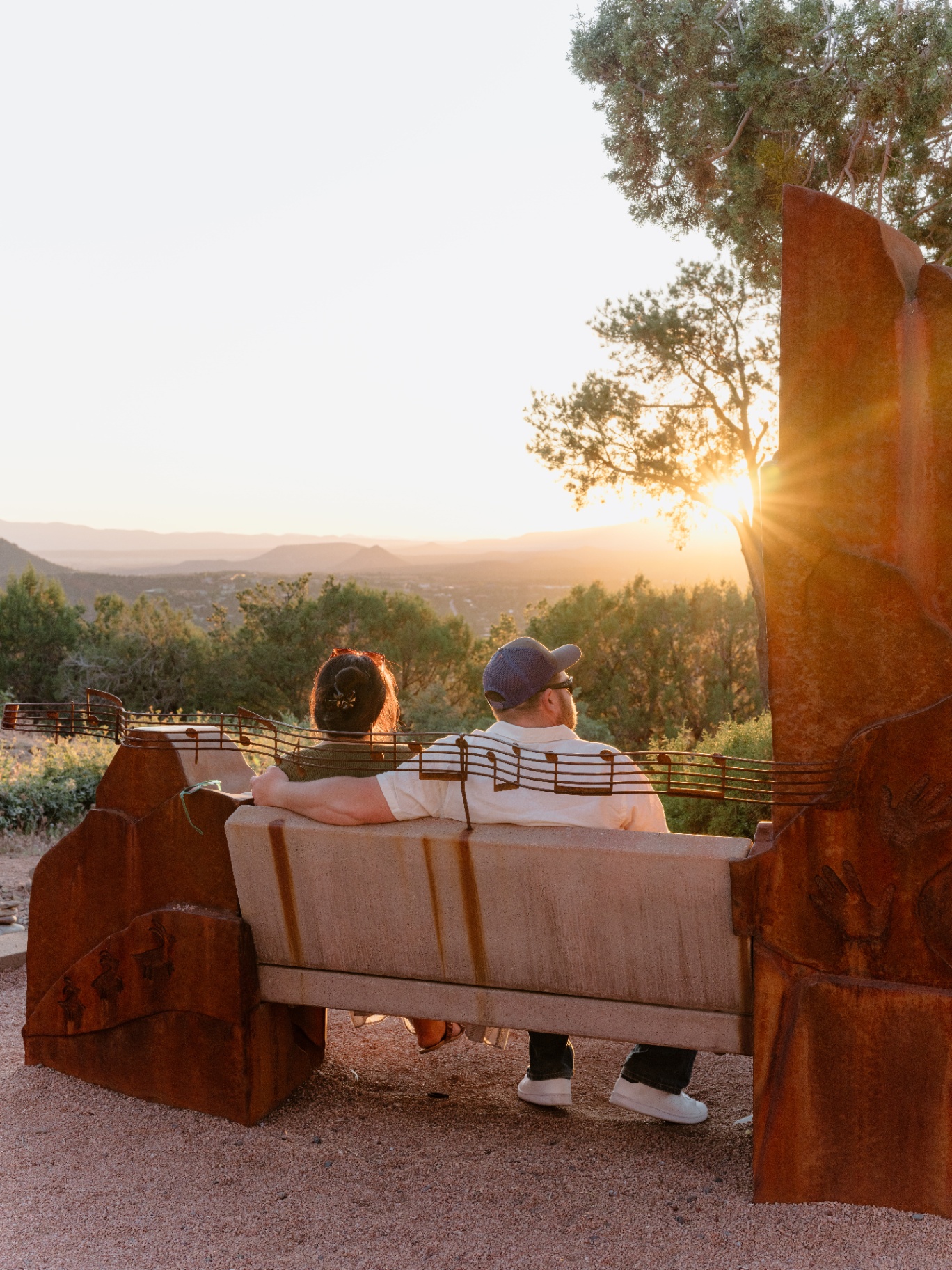
Couple watching the sunset from a bench at Sky Ranch Lodge

Make Airport Mesa your morning ritual

The vortex at your doorstep, and a quiet place to land after.

Most visitors drive across town to chase a vortex. Stay with us, and you can simply walk out the door. There's a particular magic to wandering up to the Airport Mesa Vortex at first light — the valley waking up below, the rocks catching fire, the whole of Sedona quiet — and then strolling back to the lodge for coffee on your patio and a slow loop through our botanical gardens.

That's the kind of stay Sky Ranch Lodge is built for: unhurried, restorative, rooted in this remarkable place. Browse our rooms and rates, get to know our story on the mesa, or let our Experience Concierge help you map a few quiet mornings among the red rocks. The energy, as they say, is right outside.

Vortex FAQ

Frequently asked questions

What is a Sedona vortex?+

A vortex is described as a swirling center of the earth's energy — a place believed to be especially conducive to meditation, healing and reflection. It's a spiritual concept rather than a scientifically established one, and many visitors simply experience it as a deeply calming, beautiful place to sit.

How many vortexes are there in Sedona?+

There are four main, best-known sites — Airport Mesa, Cathedral Rock, Bell Rock and Boynton Canyon — though some count more, and many say the entire Sedona area is one large vortex.

Which Sedona vortex is best for first-timers?+

Bell Rock is the common recommendation: its energy is described as powerful but balanced, and the trail is easy and accessible. Airport Mesa is the easiest to reach and the quickest climb to the top.

Which vortex is easiest to get to?+

Airport Mesa. It's a short walk and climb, with a parking area close to the site — and it's just steps from Sky Ranch Lodge, which sits on the same mesa.

Can you actually feel the vortex energy?+

Experiences vary widely. Some people report tingling, warmth or a wave of calm or clarity; others feel nothing in particular beyond the beauty of the setting. Both are completely normal — go with an open mind.

Do you need a Red Rock Pass to visit the vortexes?+

Yes, for parking at most trailheads. A Red Rock Pass or America the Beautiful interagency pass is required; buy one in advance or at a trailhead kiosk.